What I Was Trying to Accomplish
I run a small freelance business. Content strategy and copywriting. A handful of clients. Mostly repeat work. But every new client needs a proposal.
Proposals used to take me about two hours. I'd open a blank document. I'd stare at it. I'd write an introduction, a scope of work, a timeline, pricing, terms. Then I'd edit it. Then I'd edit it again.
Two hours. Every time. And I'd still sometimes miss something or send a proposal with a typo.
I wanted to cut that time down. Not by cutting corners. By building a repeatable process. Here's what I built.
What I Used
Tools: A general-purpose AI assistant (free tier) and a proposal template (Google Docs)
Input: A discovery call summary, a set of past proposals, and a pricing sheet
Time available: About 30 minutes
Goal: A complete proposal draft ready for review
The Workflow
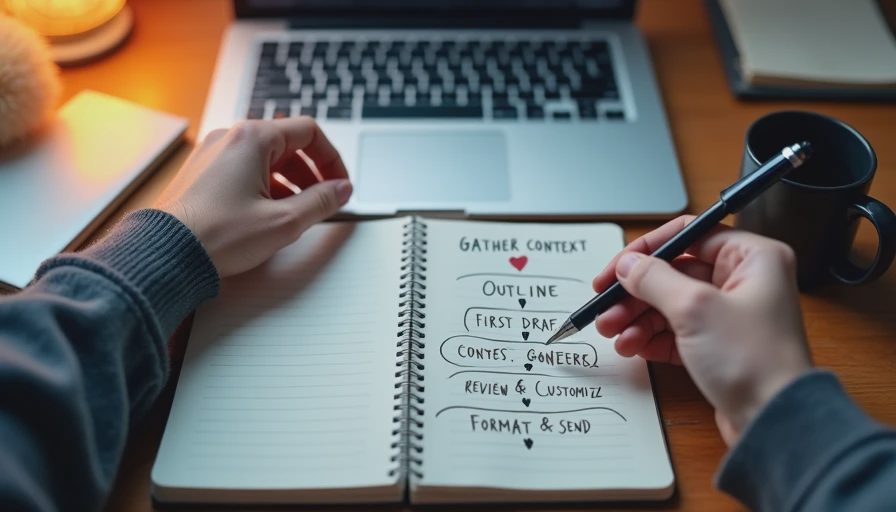
The workflow has five steps.
Step 1: Gather context. I pull together the discovery call notes, the client's goals, and the scope of work. (5 minutes)
Step 2: Draft the outline. I use AI to generate a proposal outline based on the context. (5 minutes)
Step 3: Generate the first draft. I use AI to fill in the outline with specific language. (10 minutes)
Step 4: Review and customize. I read through the draft. I add personal details, adjust pricing, and fix errors. (10 minutes)
Step 5: Format and send. I paste the draft into my template. I add the final touches. I send it. (5 minutes)
Total: about 35 minutes. But the first time I ran it, it took 30. It depends on how complex the proposal is.
The Prompts
Here are the exact prompts I use.
Prompt 1: Outline
"Here is a summary of a discovery call with a client. They need [service]. Their goals are [goals]. Their budget is [budget]. Their timeline is [timeline]. Create a proposal outline with these sections: Introduction, Understanding of Needs, Scope of Work, Timeline, Investment, Terms. Keep it simple. Do not write the full draft yet."
Prompt 2: First draft
"Here is the proposal outline: [outline]. Write a first draft of each section. Keep it professional but friendly. Use plain language. Do not use jargon. Do not use clichés. Be specific. Include placeholders for [CLIENT NAME], [SERVICE], [PRICE], and [DATE]."
Prompt 3: Review
"Here is the draft. Review it for clarity, tone, and completeness. Suggest specific improvements. Do not rewrite the whole thing. Just point out what could be better."
The Result
Here's what the workflow produced for a recent proposal.
Context: A discovery call with a new client. They need a content strategy for a product launch. Budget is $8,000-$10,000. Timeline is eight weeks.
Outline (AI-generated):
Introduction
Understanding of Needs
Scope of Work
Phase 1: Research
Phase 2: Strategy
Phase 3: Execution
Timeline
Investment
Terms
First draft (AI-generated):
The draft was about 900 words. It followed the outline. It was professional but friendly. It used plain language. It included placeholders for the details I needed to add.
What I edited:
I added the client's name and specific goals. I adjusted the pricing to match my rate. I added a personal note about their product. I changed the timeline to fit their schedule. I reviewed the terms and added a late fee clause. I fixed a few typos.
What the Workflow Does Well
It's fast. Thirty-five minutes from start to finish. That's faster than two hours.
It's consistent. I use the same prompts every time. The output format is consistent.
It gives me a starting point. Instead of staring at a blank page, I have an outline and a draft.
It saves the worst minutes. The blank page. The "where do I start?" The AI gets me moving.
It's repeatable. I've used this workflow for a few proposals now. It works every time.
What Still Needs My Attention
It misses the relationship. The AI doesn't know the client. It doesn't know the history. It doesn't know if they're warm or cold, formal or casual.
It misses the nuance. Some clients want a detailed scope. Some want a high-level overview. The AI treats them all the same.
It misses the personal touch. I added a personal note about their product. The AI didn't know that. I did.
It misses the pricing. The AI doesn't know my rates. It doesn't know what to charge. I have to set the pricing myself.
It misses the terms. The AI doesn't know my contract terms. I have to add them.
It misses the final judgment. The AI doesn't know if the proposal is good. I have to decide.
The Math
Without the workflow: Writing a proposal from scratch took about 2 hours.
With the workflow: Gathering, drafting, reviewing, and formatting took about 35 minutes.
Time saved: About 1 hour 25 minutes per proposal. That's real.
What I'd Change
I'm still refining the workflow. Here's what I'm considering.
Adding a relationship line. Something like "This is a new client" or "This is a repeat client." That might help the AI adjust the tone.
Adding a pricing line. Something like "My rate is [rate]." That might help the AI include pricing in the draft.
Adding a terms line. Something like "My standard terms are [terms]." That might help the AI include terms in the draft.
Using a better template. Google Docs works, but it's not great for proposals. I'm testing a few proposal tools.
My Question for You
What does your proposal workflow look like?
Do you use AI? Do you use a template? Do you write each one by hand?
I'm curious what works for other people. I've been using this workflow for a few proposals. It's not perfect, but it's better than spending two hours on every proposal.